

Beijing University of Technology
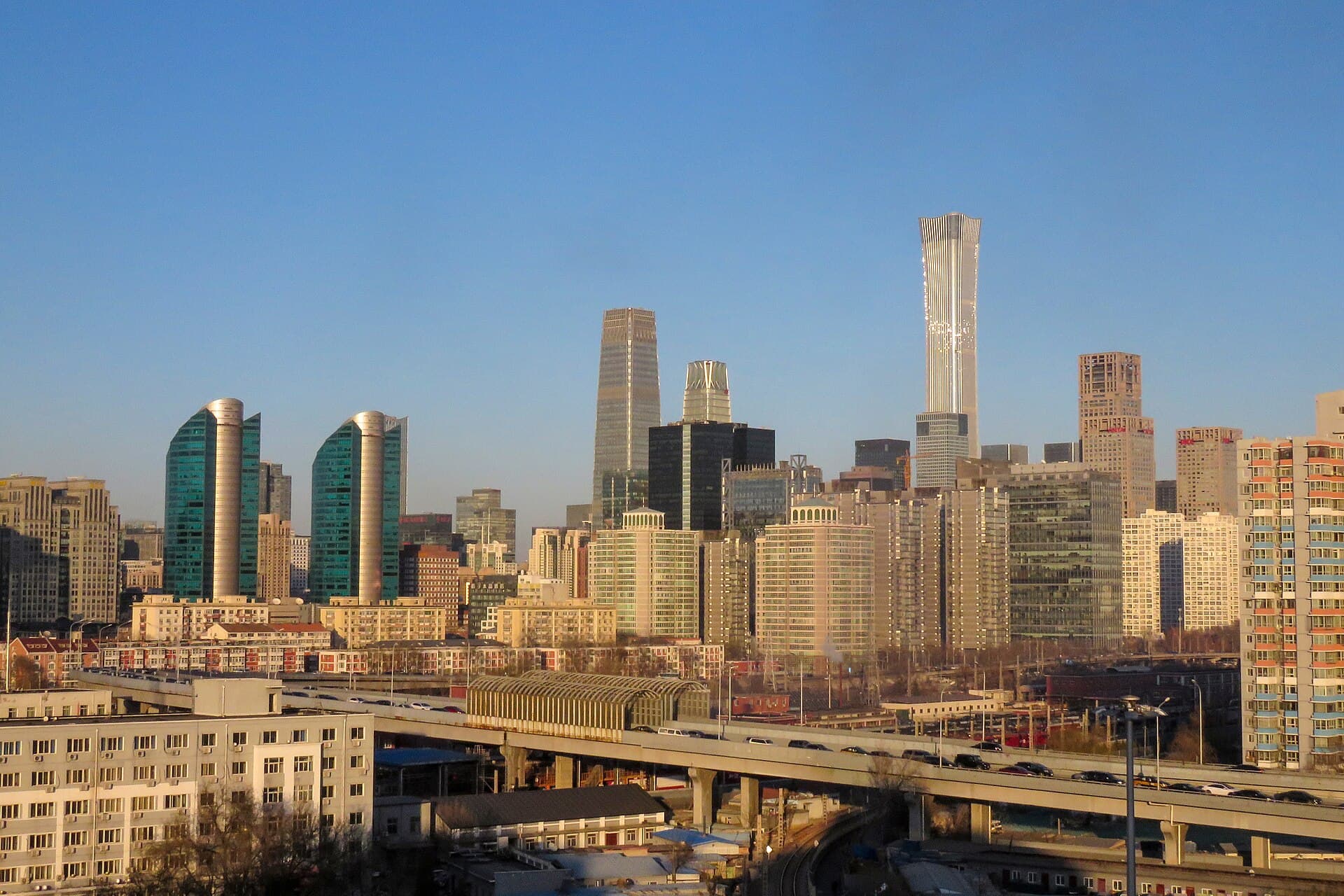
Study city
Beijing
Capital megacity · political & academic hub
- Four seasons · cold dry winters, hot summers
- History, tech, and top national universities
- Dense metro · huge international student community
211 · Double First Class · Soft #65
Photo: N509FZ · CC BY-SA 4.0 · Wikimedia Commons
About Beijing University of Technology
Beijing University of Technology (BJUT) was founded in 1960. It is a key university under the Beijing Municipal Government. It offers programs and research across science, engineering, economics, management, literature, law, philosophy, education, and art. In 1981 it was among the first universities authorized by the Ministry of Education to award master's degrees. In 1985 it gained the right to award doctoral degrees. In December 1996 it was approved under the national "211 Project" as one of about 100 key universities for the 21st century. In the 2013 QS Asian University Rankings it was ranked #126 in Asia and #29 among Chinese universities. BJUT has 3 national key disciplines: Optical Engineering, Materials Science, and Structural Engineering; 39 Beijing municipal key disciplines; 18 first-category doctoral programs; 71 second-category doctoral programs; 31 first-category master's programs; 139 second-category master's programs; and 17 post-doctoral programs. The College of International Education (CIE) supports international students.
Available Programs
16 programsKey Highlights
China Ranking
#65 in China
Average Tuition
¥42,844/year
Programs Offered
16 programs across various disciplines
University Information
University projects
Ranking
#65 in China
Intl. UG tuition
¥33,000/year
Location
Beijing
Programs on this site
16 programs
Related Universities
Explore other universities you might be interested in
Renmin University of China
Renmin University of China (RUC) is a comprehensive research university focused on humanities and social sciences. Its predecessor was Shanbei Public School (1937), later North China Union University and North China University. It was formally established as Renmin University of China on 3 October 1950 — described as the first university founded by the new Chinese government — and is a Project 211 and Project 985 university, often called a flagship for social sciences and humanities education in China. Structure: 26 schools and 14 interdisciplinary research institutes, plus School of Physics, School of Continuing Education, and School of Education & Training; a satellite campus in Suzhou and a research institution in Shenzhen. Programs: 75 bachelor’s, 4 secondary bachelor’s, 183 master’s (including 33 offered autonomously by RUC), 124 PhD (including 31 autonomous); 20 first-level PhD disciplines and 18 postdoctoral mobile centers
Beijing Jiaotong University
Beijing Jiaotong University, founded in 1896 during the Qing Dynasty, is a centrally located university in Beijing with over 22,000 full-time students and a teaching staff of 2,842, including 286 full professors. It comprises 12 schools and maintains 120 graduate programmes, 60 doctoral programmes, and 13 post-doctoral research stations. The university hosts 22 research institutes and centres, alongside 39 laboratories spanning diverse academic fields. Twelve of its disciplines are designated as key ministerial priorities. BJTU has welcomed international students since it became one of the first Chinese universities authorised by the central government to do so, and has hosted learners from more than 100 countries. Its School of Software Engineering is among China’s 37 national pilot software engineering schools and follows CDIO-based pedagogy.
North China Electric Power University
Founded in 1958 as Beijing Electric Power College, North China Electric Power University has grown into a national key university directly administered by China’s Ministry of Education. It operates two campuses: one in Beijing and another in Baoding, Hebei Province. The university offers undergraduate and postgraduate programmes focused on energy, electrical engineering, and related disciplines, with over 20,000 full-time undergraduates and 7,000 postgraduates. Its academic structure includes multiple schools and research institutes aligned with national energy sector priorities. The Beijing campus covers approximately 1600 mu, with a total floor area of about one million square metres. With around 3,000 faculty and staff, NCEPU maintains close ties with major state-owned power enterprises while pursuing disciplinary strength and applied research.
Beijing University of Chemical Technology
Founded in 1958, Beijing University of Chemical Technology is a national key university located across three campuses in Beijing: the east campus on Beisanhuan East Road, the west campus near Zizhuyuan Park, and the north campus adjacent to the Ming Tombs Scenic Area. It maintains science and engineering as its academic foundation while expanding into management, economics, law, humanities, education, philosophy, and life sciences. The university comprises twelve colleges, including Chemical Engineering, Materials Science and Engineering, and International Education, and hosts doctoral, master’s, and undergraduate programmes across more than forty disciplines. Its academic staff includes over seven hundred full and associate professors, alongside eight academicians from the Chinese Academy of Sciences and Chinese Academy of Engineering. With nearly thirty-one thousand students, the university supports a diverse cohort of domestic and international learners. English-taught master’s programmes are offered in Chemical Engineering and Materials Science and Engineering (Macromolecules).
Minzu University of China
Beijing Forestry University
Beijing Forestry University (BFU) is a national key university under the Ministry of Education of China, based in Haidian District, Beijing. Founded in 1952, it began as a forestry college and is now multi-disciplinary, with leading strengths in forestry, biology, and forestry engineering, plus courses in sciences, engineering, management, economics, liberal arts, law, and philosophy. Besides undergraduate, graduate, and doctoral education, it offers further education and international student education. It has 57 undergraduate subjects, 15 undergraduate schools, 116 graduate disciplines, and 39 doctoral disciplines. There are 495 full/associate professors, including 127 PhD supervisors and 5 academicians of the Chinese Academy of Engineering (CAE). Strong fields include landscape architecture, biological science, forestry silviculture, and soil and water conservation. About 13,000 undergraduates and 4,000 graduate students study at BFU. International students are welcome from language learners to postdoctoral researchers. By 2013, about 2,500 international students had enrolled, from countries including Korea, Japan, the United States, the United Kingdom, Thailand, Indonesia, Austria, Italy, Finland, France, Turkey, Vietnam, and Mongolia. Since 2007, BFU has admitted Chinese Government Scholarship students and is listed as a recipient university of the Beijing Municipal Government Scholarship