

Changchun University
Study city
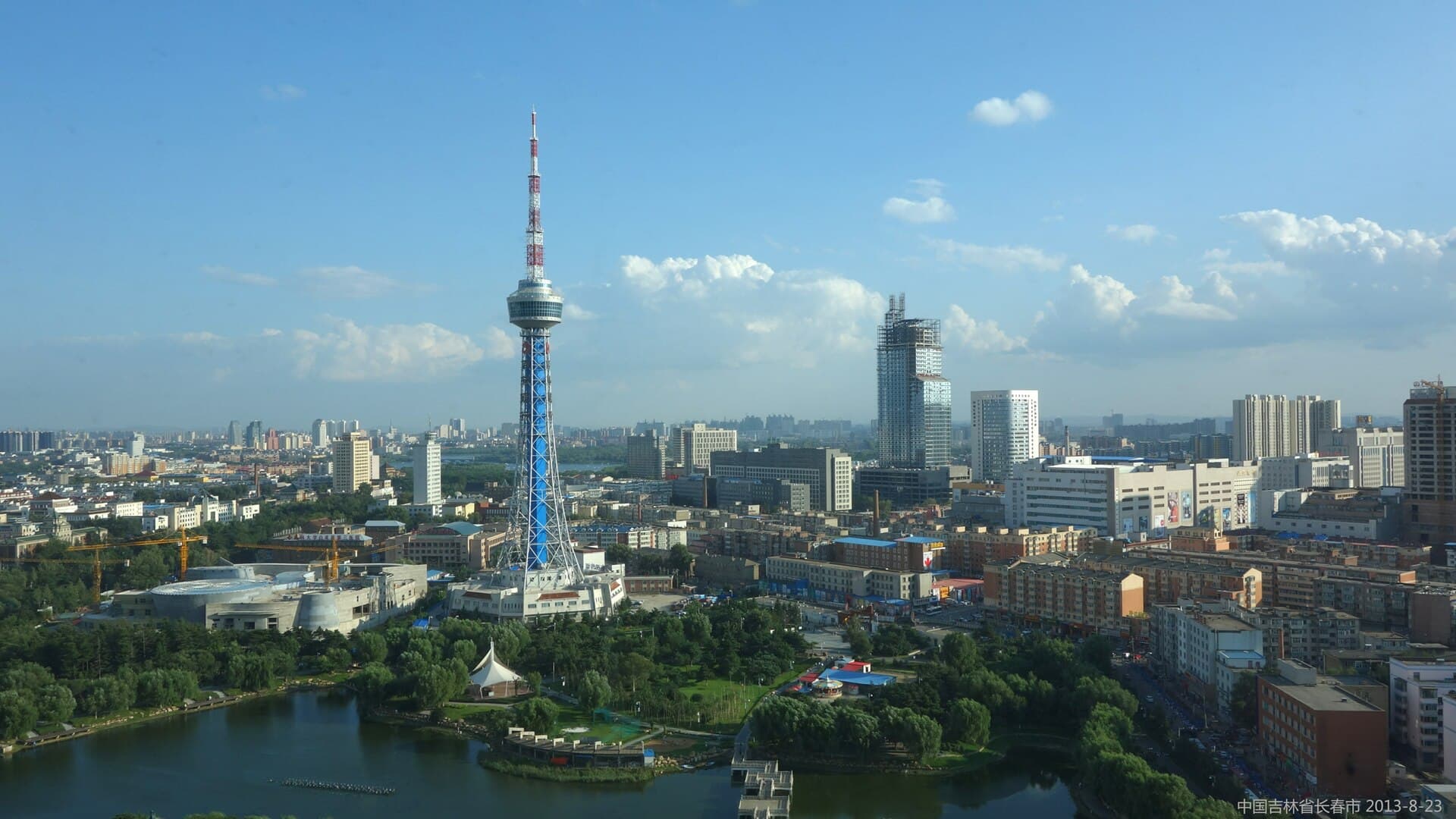
Changchun · Jilin
Northeast auto & film city
- Long cold winters · short warm summers
- Automotive industry · film heritage
- Campus clusters · lower living costs
Double First Class · Soft #368
Photo: wanghongliu · CC BY-SA 3.0 · Wikimedia Commons
Changchun University
China, Ji Lin Sheng, Chang Chun Shi, Chao Yang Qu, 东民主大街482号 邮政编码: 130061
About Changchun University
Changchun University is a multi-disciplinary university authorized by the Jilin Provincial Government. It is in Changchun, the provincial capital, and has three campuses covering 1,129,000 square meters. The university passed the Undergraduate Teaching Evaluation in 1997 and was named an Outstanding University of Undergraduate Teaching in 2006. It has trained more than 40,000 undergraduate students. Its library is among the stronger collections in Jilin Province, with about 1.38 million printed books and journals. Since 2003, the university has invested 208 million yuan in reconstruction and expansion to improve teaching and learning conditions. The university has 19 schools/institutes and offers 43 undergraduate degree programs. It has more than 13,000 students and over 613 instructors, including 91 professors and 206 associate professors. It has 3 national-level science research centers, 1 provincial key academic discipline, 1 provincial key science lab, and 2 provincial key humanities and social sciences research bases. Study areas include philosophy, economics, law, education, literature, history, science, engineering, agriculture, medicine, and management. The Foreign Affairs Department and the International Culture Exchange Institute have received outstanding-work recognition from the Jilin Provincial Government for 10 years. Changchun University is one of about 200 institutions authorized by the National Education Committee to accept foreign students.
Key Highlights
China Ranking
#368 in China
University Information
University projects
Ranking
#368 in China
Location
Changchun, Jilin
Schools & colleges
19
Degree programmes
0 undergraduate
Related Universities
Explore other universities you might be interested in
Changchun University of Science and Technology
Changchun University of Science and Technology (CUST) was founded in 1958 by the Chinese Academy of Sciences. It is a provincial key university in Jilin Province, known for optoelectronic technology and for combining optics, mechanics, electronics, computer science, and materials science. It also develops arts, economics, management, and law. It is often called “the Cradle for Chinese Optical Talents.” CUST has 18 schools and teaching units, 57 undergraduate programs, 83 graduate programs, and 25 doctoral programs. Strong research areas include laser technology, optoelectronic instruments, measurement techniques, advanced manufacturing, optoelectronic medical instruments, and nanometer manufacturing. As of September 2016: 16,103 undergraduates, 4,408 postgraduates, and 467 doctoral candidates. The university has partnerships with universities and research institutes in more than 20 countries, and has a Confucius Institute in Russia. It is listed among Shanghai Cooperation Organization Chinese-project universities. More than 300 international students from about 50 countries study at CUST each year.
Northeast Normal University
Northeast Normal University opened in Changchun in 1946 and has since grown into a national key university with a consistent emphasis on teacher education and educational theory. Its academic structure includes several schools delivering undergraduate, master’s, and doctoral programmes, with particular depth in pedagogy, psychology, and curriculum development. While rooted in the training of school educators for northeast China, it also maintains teaching and research activity across the humanities and sciences. The campus reflects its long institutional commitment to education as both discipline and practice. It forms part of China’s 211 Project, supporting sustained development in selected universities.
Jilin University
Jilin University was founded in 1946. After decades of development and mergers of six higher education institutions, it became China’s largest comprehensive university by student enrollment, supported by national key projects including Project 211 and Project 985. It offers all 13 academic categories: Philosophy, Economics, Law, Education, Literature, History, Science, Engineering, Agriculture, Medicine, Management, Military Science, and Arts — with 124 undergraduate, 299 master’s, 237 doctoral, and 41 post-doc programs. Faculty: 6,568 members, including 2,058 full professors (1,186 doctoral advisors) and 24 members of the Chinese Academy of Sciences and Chinese Academy of Engineering (15 adjunct academicians). Full-time students: 68,957, including over 24,021 master’s/doctoral and over 43,024 undergraduates. Library collection: 6.59 million books; designated UNESCO, UNIDO, and World Bank library; CALIS center for Northeast China. About 2,000 international students from 98 countries study in 124 programs across 37 colleges (including School of International and Public Affairs, College of Humanities, Norman Bethune College of Medical Science, Economics School, and others). Popular programs include International Relations, Chinese language, World Economy, and Diplomacy
Tsinghua University
It was formed in June 2016 by merging Shanghai Lixin University of Commerce and Shanghai Finance University. Its roots go back to Lixin education founded by Dr. Pan Xulun in 1928. In 2022, the School of Business and Administration received five-year full AACSB accreditation. SLU has three campuses in Pudong, Songjiang, and Xuhui, covering more than 1,200 mu (about 800,000 square meters). It has more than 19,000 full-time students, including over 370 graduate students; 3 master’s degree programs and 40 undergraduate majors; more than 1,630 faculty and staff, including over 1,240 full-time teachers
Peking University
Established in 1898 in Beijing, Peking University is China’s first national university. Its campus hosts five faculties—Humanities, Social Sciences, Sciences, Medicine, and Information and Engineering—alongside 47 colleges and departments. The university offers over one hundred undergraduate programmes and more than five hundred graduate and doctoral programmes. With around 34,000 students including nearly 2,400 international learners from 80 countries, its academic community is both large and diverse. The teaching staff includes over 5,800 full-time faculty members, among them more than 1,700 professors and over 60 academicians of the Chinese Academy of Sciences and Chinese Academy of Engineering. Research infrastructure includes 11 national key laboratories, 46 state key laboratories, and a library holding 7.7 million volumes—the largest university library in Asia.
Zhejiang University
Zhejiang University, founded in 1897 in Hangzhou, is one of China’s leading comprehensive research universities. Teaching and research span science, engineering, medicine, humanities, and social sciences. International students study across a wide range of undergraduate and postgraduate programmes.