

Huazhong University of Science and Technology
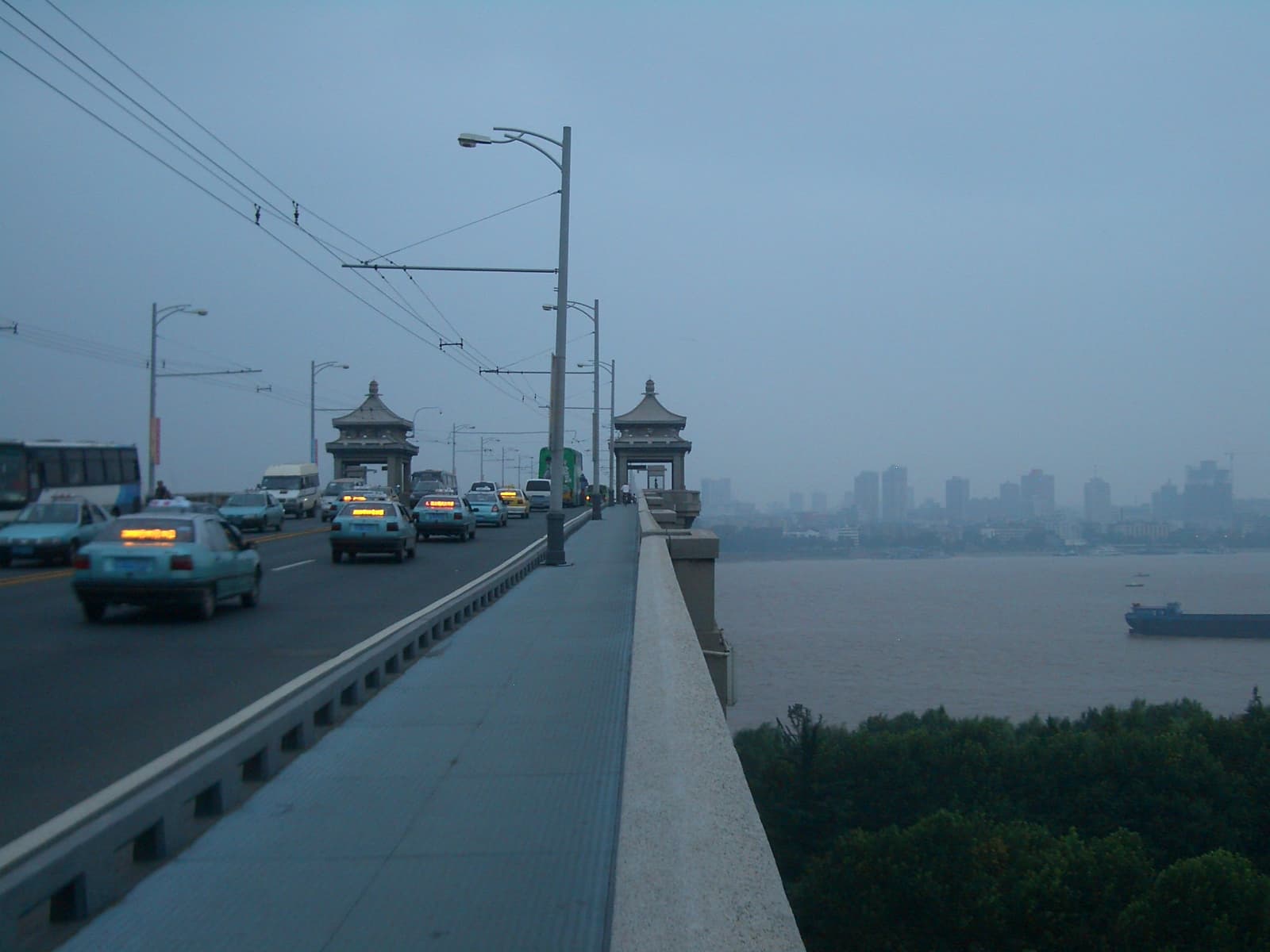
Study city
Wuhan · Hubei
Central China · Yangtze crossroads
- Hot humid summers · cool winters
- Education cluster · river city
- Large student population · metro growing fast
985 · Double First Class · Soft #9
Photo: User:Vmenkov · CC BY-SA 3.0 · Wikimedia Commons
Huazhong University of Science and Technology
China, Hu Bei Sheng, Wu Han Shi, Hong Shan Qu, 珞喻路1037号 邮政编码: 430074
About Huazhong University of Science and Technology
Huazhong University of Science and Technology stands in Wuhan, central China’s largest inland city. Founded in 1953, it is one of China’s national key universities, administered directly by the Ministry of Education. Its campus spans over 1,150 acres and features dense tree cover—nearly three-quarters of the grounds are green, earning it the informal title 'University in the Forest'. The university offers programmes across twelve academic disciplines, with around 60,000 students enrolled, including over 3,000 from more than 130 countries. It delivers undergraduate, master’s, doctoral and post-doctoral training through 95 bachelor’s, 224 master’s and 183 doctoral programmes. Research infrastructure includes five national key laboratories, the Wuhan National Laboratory for Optoelectronics, and a high magnetic field facility—one of only four such centres globally. Teaching staff include approximately 900 professors and 1,200 associate professors.
Available Programs
78 programsKey Highlights
China Ranking
#9 in China
Average Tuition
¥12,350/year
Programs Offered
78 programs across various disciplines
University Information
University projects
Ranking
#9 in China
Intl. UG tuition
¥18,000–¥40,000/year
Location
Wuhan, Hubei
Degree programmes
95 undergraduate · 224 master's · 183 doctoral
International students
3,000
Programs on this site
78 programs
Related Universities
Explore other universities you might be interested in
China University of Geosciences
Founded in 1952 and based in Wuhan, China University of Geosciences specialises in Earth sciences while maintaining a broad academic structure across science, engineering, humanities, social sciences, and education. It delivers integrated undergraduate, master’s, doctoral, and postdoctoral training through 19 colleges offering 57 bachelor’s, 106 master’s, and 37 doctoral programmes. The university hosts national and provincial key laboratories and engineering centres, supported by around 1,300 academic staff—including nine members of the Chinese Academy of Sciences. Its campus features comprehensive teaching facilities, extensive library and museum collections, and accommodates approximately 20,000 full-time students, including over 500 international degree-seeking students. CUG has welcomed overseas learners since the 1980s and currently hosts more than 400 international students enrolled in degree programmes, alongside short-term and exchange visitors each year.
Hubei University
Founded in 1931, Hubei University is situated in central Wuhan, the largest city in central China. Its campus spans over 2000 mu and includes more than 700,000 square metres of academic and residential buildings. The university comprises 18 disciplinary colleges and delivers 74 undergraduate programmes alongside doctoral and master degrees across a broad range of fields. It hosts around 20,000 full-time undergraduates and college students, over 4500 postgraduate students, and approximately 200 international students annually from more than 20 countries. With more than 1140 teaching staff—including over 700 professors and associate professors—the university maintains active research programmes supported by two state key laboratories and several provincial research platforms. Its library holds nearly 2.2 million physical volumes and occupies over 46,000 square metres.
Zhongnan University of Economics and Law
Zhongnan University of Economics and Law is based in Wuhan, a major city in central China. Founded in 1948, it operates under the Ministry of Education and focuses primarily on economics, law, and management, supported by programmes in literature, history, philosophy, science, engineering, and art. The university comprises 19 schools and offers 51 undergraduate majors, 89 master’s and 51 doctoral programmes, including degrees in accounting, finance, international law, and IMBA—taught in English and accredited by AMBA. It hosts six postdoctoral mobile research centres and maintains a state-level intellectual property research base. Its nationally designated key disciplines include public finance, accounting, finance, and civil and commercial law. With over 20,000 students, ZUEL delivers taught and research-based education across multiple academic levels.
Wuhan University
Wuhan University is a key university under China’s Ministry of Education, in Wuhan, capital of Hubei Province. The campus sits by Luojia Hill and East Lake and covers about 373 hectares. It is often described as one of the more scenic university campuses in China. Its history goes back to Ziqiang Institute, founded in 1893 by Zhang Zhidong. After several name changes it became National Wuhan University in July 1928. By the end of 1946 it had six colleges: liberal arts, law, sciences, engineering, agriculture, and medicine. On 2 August 2000, with State Council approval, a new Wuhan University was formed by merging the original Wuhan University, Wuhan University of Hydraulic and Electrical Engineering, Wuhan Technical University of Surveying and Mapping, and Hubei Medical University. It now has 6 faculties and 37 schools across 12 areas: Philosophy, Economics, Law, Education, Literature, History, Sciences, Engineering, Agriculture, Medicine, Management, and Arts. Programs include 124 undergraduate, 347 graduate, and 243 doctoral programs, including 5 undergraduate and 6 master’s programs taught in English )
Wuhan University of Technology
Wuhan University of Technology (WUT) is in Wuhan, a major city in central China on the Yangtze. It has three main campuses—Mafangshan, Yujiatou, and South Lake—covering about 267 hectares. WUT was formed on 27 May 2000 by merging the former Wuhan University of Technology (est. 1948), Wuhan Transportation University (est. 1946), and Wuhan Automotive Polytechnic University (est. 1958). It is under the direct administration of China’s Ministry of Education, a “211 Project” university, and its Material Science and Engineering entered the “985 Project” for key disciplines. Staff: about 5,260, including 767 professors, 1,342 associate professors, 2 academicians of the Chinese Academy of Engineering, and 1 member of the Royal Academy of Belgium. Seven foreign professors were recruited globally as “Strategic Scientists” in Materials Science & Engineering, Mechanical Engineering, and Naval Architecture & Ocean Engineering. Structure: 23 academic schools; 8 state key disciplines; 74 doctoral, 188 master’s, and 87 bachelor’s programs. Students: over 37,300 undergraduates, about 16,000 postgraduates (master’s and PhD), and over 1,000 international students
Central China Normal University
Central China Normal University (CCNU) was founded in 1903 and took the name CCNU in 1985. It is a comprehensive university on the National 211 Priority Project list. The campus is on Guizi Mountain in Wuhan, bordering East Lake and South Lake. CCNU has 25 schools and departments, more than 60 research institutes/centers, 59 bachelor's programs, 94 doctoral programs, and 184 master's programs. Student body over 30,000, including 8,000 postgraduates and more than 2,700 international students. CCNU was among the first Chinese universities to accept international students and is appointed to accept students with Chinese Government Scholarship. It is also among the earliest state-level Chinese Language Teaching Bases ratified by the State Council. It has exchange and research cooperation with more than 100 universities in over 70 countries, including the United States, Germany, Japan, Russia, France, New Zealand, Australia, Korea, and Vietnam. Overseas enrollment began in 1965. About 2,700 overseas students from more than 100 countries study long-term or for degrees