


Nankai University
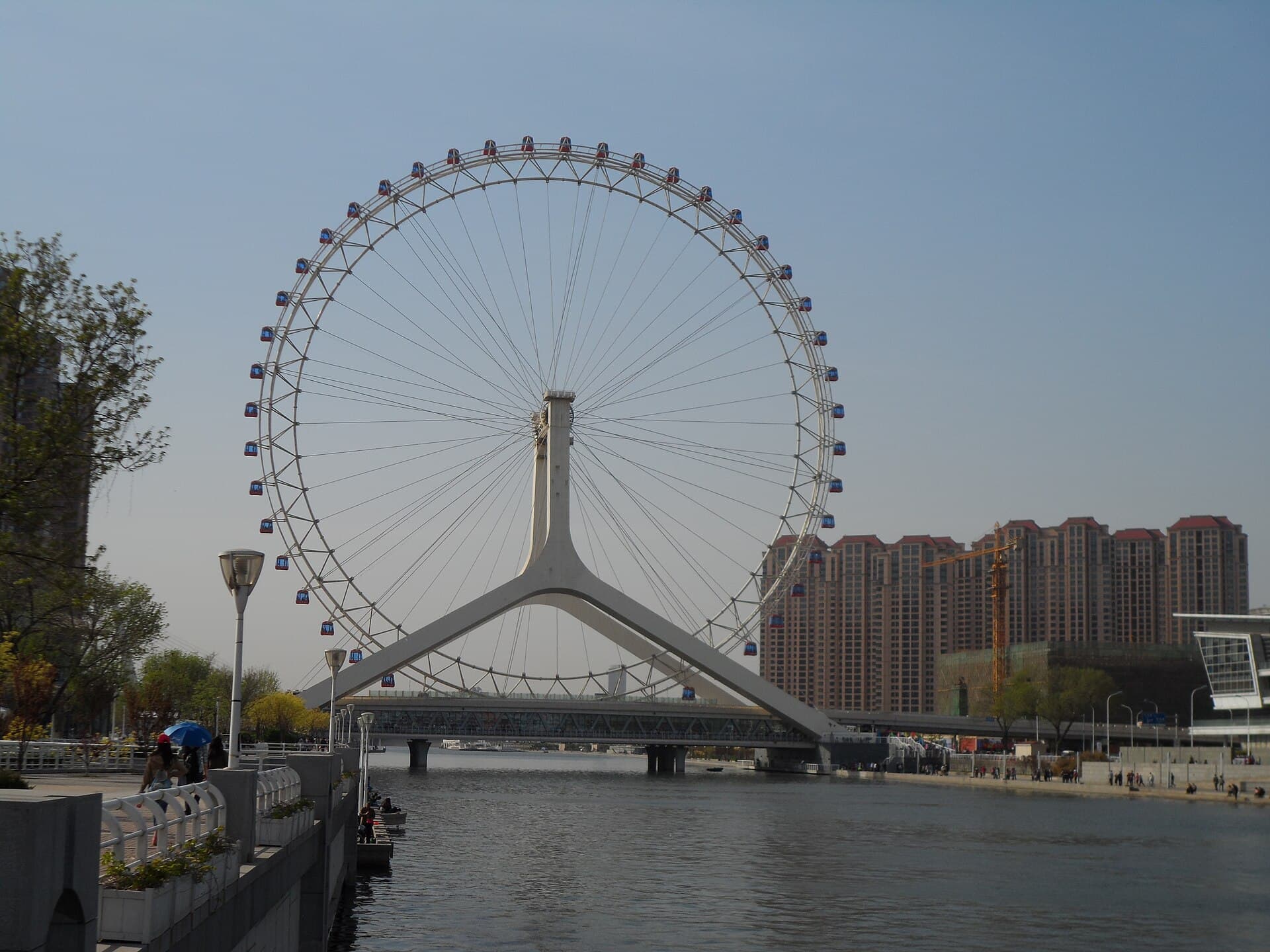
Study city
Tianjin
Port city · near Beijing
- Four seasons · windy coastal winters
- Concession architecture · industry & research
- Fast train to Beijing · compact downtown
985 · Double First Class · Soft #21
Photo: 钉钉 · CC BY-SA 4.0 · Wikimedia Commons
About Nankai University
Nankai University, founded in 1919 in Tianjin, is a major multidisciplinary university covering humanities, natural sciences, technology, life sciences, medical sciences, and the arts. It is a member of Project 985 and Project 211. The university has cooperative ties with about 300 colleges and research institutes in over 40 countries. Enrollment is about 24,000 students, including almost 3,000 international students. More than 10,000 foreign graduates have studied at Nankai. Alumni mentioned include Zhou Enlai and two Nobel Prize winners, along with well-known writers and historians. English-taught master’s programs and Chinese language study are available. Library: four main libraries and resource centres; about 3,822,000 volumes and 30 terabytes of e-books; book circulation service for students. Campus smart card covers library/teaching building access, canteen and supermarket payments, and city transport. Computer access includes 100+ library computers, school IT suites (Monday–Friday), and free campus Wi-Fi. Sports facilities include an Olympic-size swimming pool, outdoor stadium, running track, soccer and basketball courts, and 100+ tennis, table tennis, and badminton courts, plus clubs such as Kung Fu and Tai Chi. Tianjin is about 30 minutes by high-speed train from Beijing.
Available Programs
13 programsKey Highlights
China Ranking
#21 in China
Average Tuition
¥50,769/year
Programs Offered
13 programs across various disciplines
University Information
University projects
Ranking
#21 in China
Intl. UG tuition
¥20,000–¥35,000/year
Location
Tianjin
Schools & colleges
300
International students
3,000
Programs on this site
13 programs
Related Universities
Explore other universities you might be interested in
Tianjin Normal University
It was formed in June 2016 by merging Shanghai Lixin University of Commerce and Shanghai Finance University. Its roots go back to Lixin education founded by Dr. Pan Xulun in 1928. In 2022, the School of Business and Administration received five-year full AACSB accreditation. SLU has three campuses in Pudong, Songjiang, and Xuhui, covering more than 1,200 mu (about 800,000 square meters). It has more than 19,000 full-time students, including over 370 graduate students; 3 master’s degree programs and 40 undergraduate majors; more than 1,630 faculty and staff, including over 1,240 full-time teachers

Tiangong University
Tiangong University, established in 1912 in Tianjin, is a multidisciplinary institution with two campuses and around 2,000 international students. It offers undergraduate and postgraduate programmes in engineering, computer science, management, and other fields, many delivered in English. The university operates several academic schools and maintains a focus on applied learning across its curriculum. Its location in Tianjin—a major port city and industrial hub—supports close links between study and regional economic activity. Student numbers and programme scope reflect its long-standing role in technical and managerial education in northern China.
Tianjin Medical University
Tianjin Medical University (TMU) was founded on 16 June 1951 as the first medical institute approved by the State Council after the founding of the People’s Republic of China. The first president was Professor Xianyi Zhu (endocrinology and medical education). TMU is a national “211 Project” key university. It focuses on research and education with medicine at the core and life science as a main support, aiming to be a multi-disciplinary medical university. Full-time students: 9,040 — 5,138 undergraduates, 401 PhD students, 2,381 master’s students, and 1,430 international students from 60 countries. It was among the first eight pilot medical universities for 8-year medical education and among the first 15 pilots for the seven-year medical program. It has 3 post-PhD research stations, 37 PhD authorizing units, 68 master’s degree authorizing units, 180 PhD supervisors, and 612 master’s supervisors. It passed Ministry of Education assessments for undergraduate and seven-year higher medical education with excellent results in 2002 and again in 2008

Tianjin University of Traditional Chinese Medicine (TUTCM), founded in 1958 in Tianjin, specialises in traditional Chinese medicine and related health sciences. Programmes combine classroom teaching with clinical practice pathways. International students enrol in degree and training options in Chinese medicine and allied fields.
Hebei University of Technology
Hebei University of Technology (HEBUT) is a key provincial university and a national “Project 211” university. Under Hebei Province, it specializes in engineering and also covers technology, science, economics, management, and arts. Founded in 1903 as Beiyang Technical School, it follows the motto “Diligence, Prudence, Devotion and Loyalty” and stresses both academic learning and engineering practice. It offers 69 undergraduate programs across engineering, science, economics, management, art, and law. Structure: 17 schools/departments, 1 physical-training teaching department, and 2 teaching administrative schools. It has 6 state-level characteristic disciplines, 18 province-level representative programs, 2 national key disciplines, 4 province-level advantageous disciplines, and 20 provincial key disciplines. There are 42 doctoral disciplines and 131 master’s or professional degree fields. HEBUT was the first engineering-based university in China to launch an MBA program and is the only university in Hebei offering EMBA education. It has 9 post-doctoral work stations; Material Science and Engineering is a special national program among them. Faculty: 2,474 qualified members; among 1,365 full-time teachers, 706 hold senior titles and 682 have doctorates
Tianjin Foreign Studies University (TFSU) focuses on Foreign Language & Literature, with supporting disciplines in Humanities, Economics, Administration & Management, Law, Education, Art, and Engineering. It has two campuses totaling 69.34 hectares: Machang Road campus (listed among the Ten Sites of Tianjin, with classical European-style buildings) and Binhai Campus in the university garden of Dagang District, Tianjin Binhai New Area (TBNA). Enrollment: over 10,000 full-time degree candidates including over 1,000 graduate students from 29 provinces, municipalities, and autonomous regions; international students from 48 countries. About 50% of teaching staff have studied or worked overseas (up to 90% in some programs). Each year about 100 international experts and foreign teachers are invited. TFSU has cooperative relations with about 100 universities and educational institutions in over 40 countries. It was among the first universities designated by Hanban (Confucius Institute Headquarters) to train full-time Confucius Institute teachers. It has co-sponsored Confucius Institutes at Soonchunhyang University (South Korea), University of Lisbon (Portugal), University of Toulouse (France), Volgograd State Pedagogical University (Russia), Jorge Tadeo Lozano University (Colombia), and Kyiv State Linguistic University (Ukraine), and has hosted programs linked to Sejong School (South Korea) and the Goethe German Language Center (Germany) )