

Ningbo University of Technology
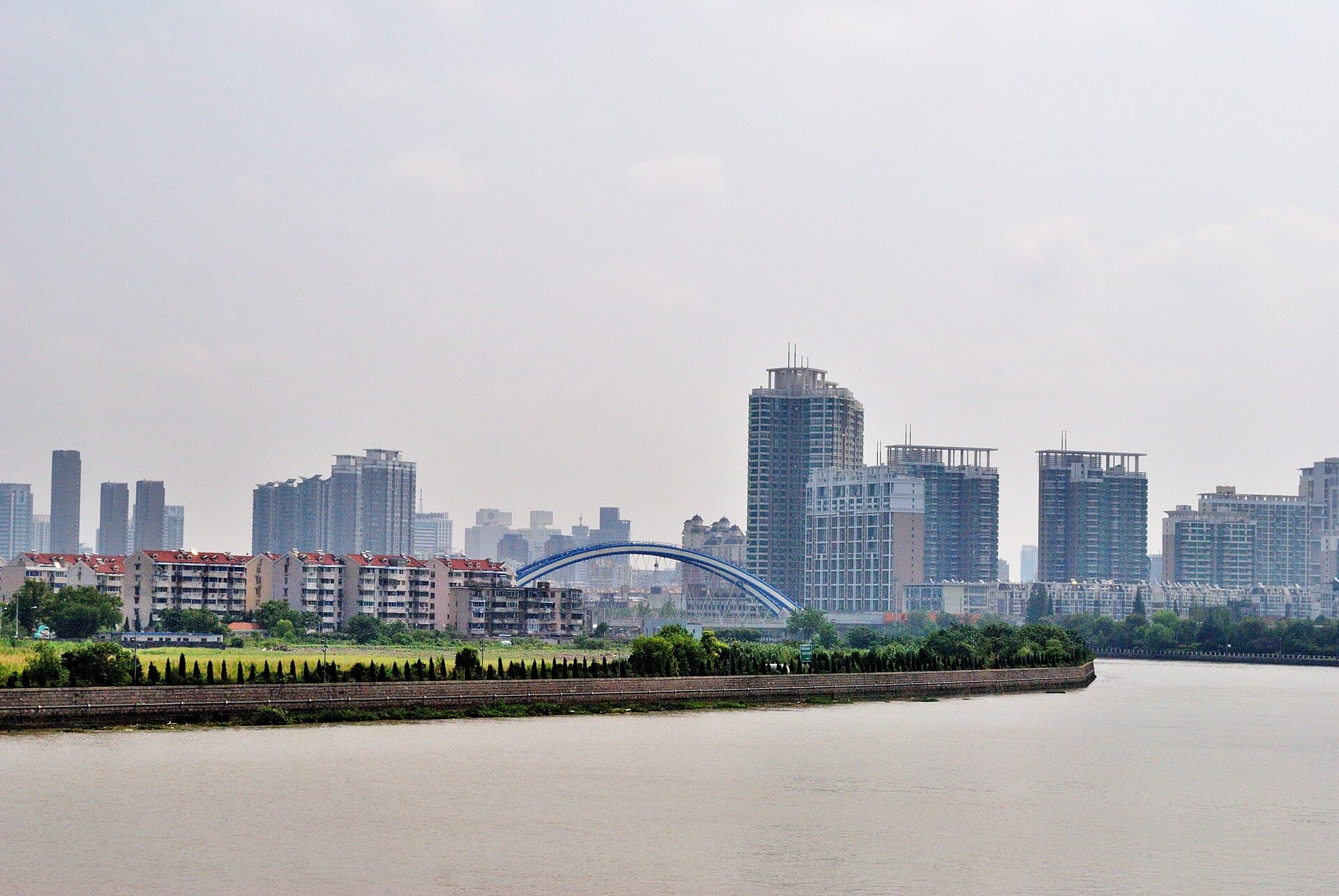
Study city
Ningbo · Zhejiang
Port city · near Hangzhou Bay
- Mild · humid subtropical
- Trade port · private enterprise
- Compact downtown · easy trips to Shanghai
Double First Class · Soft #292
Photo: Siyuwj · CC BY-SA 3.0 · Wikimedia Commons
Ningbo University of Technology
1 Xue Fu Lu, Yin Zhou Qu, Ning Bo Shi, Zhe Jiang Sheng, China, 315104
About Ningbo University of Technology
Ningbo University of Technology, founded in 1983, is a full-time undergraduate university run by the Ningbo Municipal People’s Government. It has two campuses totaling about 374,992 square meters, with further East Campus construction underway. Faculty: 1,042 staff including 68 professors and 236 associate professors, with 243 doctoral degree holders. Full-time students: more than 13,200. Library: about 1.2986 million books. The university prioritizes engineering while developing multiple disciplines. It has 12 secondary schools, 35 specialties, 1 national key specialty, 4 provincial key specialties, and 6 provincial key disciplines. In 2010 it joined the Ministry of Education “outstanding engineering cultivation project.” International cooperation began with Aachen University of Applied Sciences in 1984 (one of four Sino-German cooperated universities nationwide). It is the only Zhejiang university in the Ministry of Education “1+2+1 Sino-US Talent Cultivation Program.” Partners include institutions in the USA, Germany, Australia, UK, Canada, Austria, France, Japan, and Ireland. More than 150 students have studied or exchanged at partners such as Aachen University of Applied Sciences, South Western Sydney Institute, Anhalt University of Applied Sciences, and the University of Hertfordshire. Joint modes include 4+0, 2+2, 1+2+1, 2+1+1, and 2.5+1+0.5
Key Highlights
China Ranking
#292 in China
University Information
University projects
Ranking
#292 in China
Location
Ningbo, Zhejiang
Faculty
About 1,042
Degree programmes
243 doctoral
Full-time enrollment
13,200
Related Universities
Explore other universities you might be interested in
Ningbo University
Ningbo University was founded in 1986 with donations from Sir Yue-kong Pao. The main campus is in the northern part of Ningbo Higher Education Mega Center, beside the Yongjiang River, covering over 184 hectares with about 890,000 square meters of floor space. Libraries hold about 1.7 million books and 115,000 GB of digital resources, with a CNKI Network Service Center. There are eight affiliated hospitals and eight internship hospitals. Staff: about 2,400, including over 1,400 teaching and research staff (650 with PhDs). Programs include three postdoctoral research programs and 75 bachelor programs across economics, law, education, liberal arts, history, science, engineering, agronomy, medicine, management, and arts. Full-time undergraduates: 26,527; postgraduates: 5,118; part-time students: 17,247. International links: cooperation with more than 140 institutions in over 40 countries; joint programs such as China-Australia MBA, China-France Tourism Management, and China-USA Mathematics and Applied Mathematics. More than 2,300 international students and 1,055 degree seekers study at the university. Two Confucius Institutes were established with the University of Iceland and the University of Toamasina (Madagascar). Agreements also exist with multiple universities in Taiwan and Hong Kong

University of Nottingham Ningbo China
Established in 2004 in Ningbo, University of Nottingham Ningbo China is the first Sino-foreign university approved by China’s Ministry of Education. It functions as an integral part of the University of Nottingham’s global structure, with all degrees awarded under UK validation. The campus houses three faculties—Social Sciences; Arts and Humanities; and Science and Engineering—as well as eight academic divisions, including Nottingham University Business School China and the Centre for English Language Education. Programmes span undergraduate, master’s and doctoral levels in fields such as computer science, engineering, international studies and sustainable development. Graduates have received degrees since 2006, with bachelor’s awards beginning in 2008. Teaching and research follow the academic standards of the UK institution, with emphasis on globally informed perspectives.
Tsinghua University
It was formed in June 2016 by merging Shanghai Lixin University of Commerce and Shanghai Finance University. Its roots go back to Lixin education founded by Dr. Pan Xulun in 1928. In 2022, the School of Business and Administration received five-year full AACSB accreditation. SLU has three campuses in Pudong, Songjiang, and Xuhui, covering more than 1,200 mu (about 800,000 square meters). It has more than 19,000 full-time students, including over 370 graduate students; 3 master’s degree programs and 40 undergraduate majors; more than 1,630 faculty and staff, including over 1,240 full-time teachers
Peking University
Established in 1898 in Beijing, Peking University is China’s first national university. Its campus hosts five faculties—Humanities, Social Sciences, Sciences, Medicine, and Information and Engineering—alongside 47 colleges and departments. The university offers over one hundred undergraduate programmes and more than five hundred graduate and doctoral programmes. With around 34,000 students including nearly 2,400 international learners from 80 countries, its academic community is both large and diverse. The teaching staff includes over 5,800 full-time faculty members, among them more than 1,700 professors and over 60 academicians of the Chinese Academy of Sciences and Chinese Academy of Engineering. Research infrastructure includes 11 national key laboratories, 46 state key laboratories, and a library holding 7.7 million volumes—the largest university library in Asia.
Zhejiang University
Zhejiang University, founded in 1897 in Hangzhou, is one of China’s leading comprehensive research universities. Teaching and research span science, engineering, medicine, humanities, and social sciences. International students study across a wide range of undergraduate and postgraduate programmes.
Shanghai Jiao Tong University
Founded in 1896, Shanghai Jiao Tong University is one of China’s oldest universities and is based in Shanghai’s Minhang and Xuhui districts. It comprises 28 schools and departments, offering 64 undergraduate programmes across nine disciplinary areas including engineering, medicine, science, and management. The university hosts over 44,000 students, including nearly 6,000 international learners, and employs more than 2,800 full-time academic staff. Its research infrastructure includes eight state key laboratories and multiple national engineering research centres. SJTU awards degrees at bachelor’s, master’s, and doctoral levels across a broad range of disciplines, with particular depth in engineering and the natural sciences. The university operates several affiliated hospitals and maintains close ties with Shanghai’s municipal government and national education authorities.