

Shanghai Business School
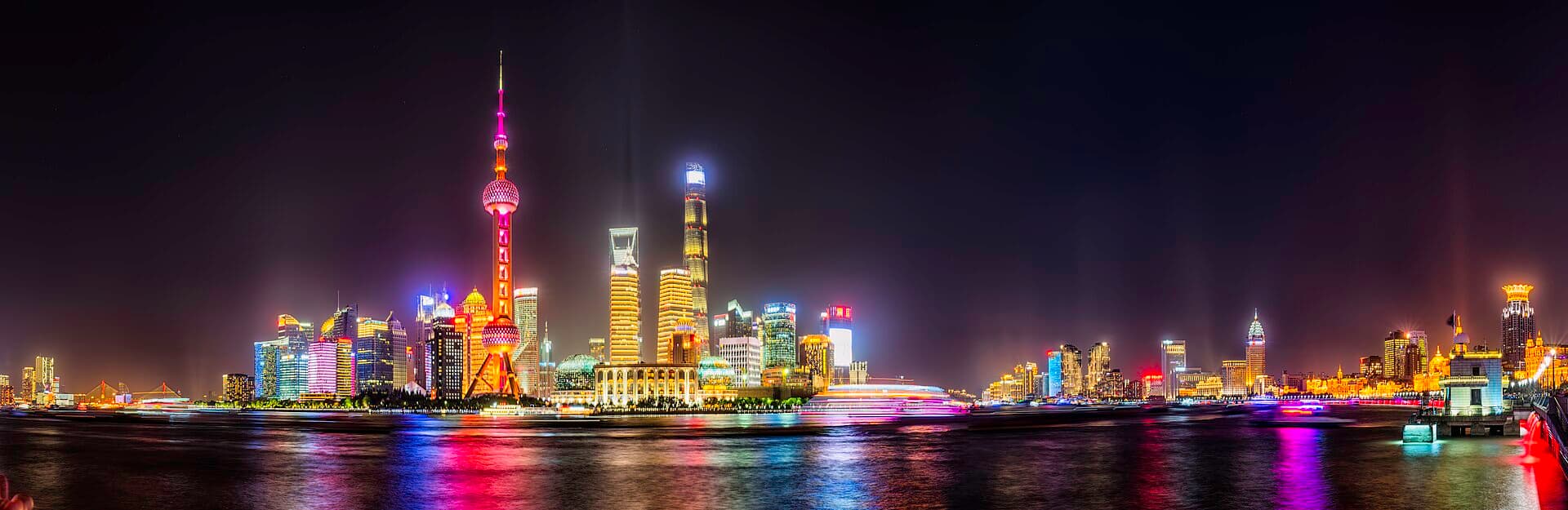
Study city
Shanghai
Coastal megacity · Yangtze Delta
- Humid subtropical · mild winters, hot summers
- Finance, design, and global business
- Metro-first · international neighborhoods
Where Shanghai Business School is based
Photo: David Zhang from Canada · CC BY-SA 2.0 · Wikimedia Commons
Shanghai Business School
123 Feng Pu Da Dao, Feng Xian Qu, Shang Hai Shi, China, 201499
About Shanghai Business School
Shanghai Business School (SBS), formerly the East China Branch of the Tax Administration School of the Central Government, is described as a roughly 60-year-old institution under Shanghai Municipal Government. Faculty: more than 400 full-time instructors — about 37.9% with master’s or PhD degrees and 34.7% associate professors, professors, or researchers — plus over 100 visiting professors drawn from senior business leaders. More than 10,000 full-time students across twelve divisions: Management; Economics; Finance and Accounting; Ecology and Tourism; Art and Design; Foreign Languages and International Exchange; Computer and Electronic Information; Food Science; Media and Journalism; Law and Politics; College of Social Science and Foundation Courses; and Adult Education. Offerings: 20 undergraduate programs, 45 advanced vocational programs, and seven Sino-foreign cooperation programs (two national educational-reform experimental programs and one municipality-level). Graduate employment rate cited as remaining over 95%
Key Highlights
University Information
Location
Shanghai
Faculty
About 400
Degree programmes
20 undergraduate
Related Universities
Explore other universities you might be interested in
Fudan University
Fudan University, established in 1905, is situated in Shanghai’s Yangpu District and forms part of China’s national key universities. Its campus hosts over 30,000 students and includes five national key laboratories alongside a library holding more than five million volumes. The university comprises multiple schools and colleges, offering undergraduate, master’s, and doctoral programmes across disciplines. Teaching and research span the humanities, sciences, medicine, and social sciences. Its location in central Shanghai supports close ties with academic, cultural, and professional communities in the city. The university operates primarily in Mandarin, though some postgraduate programmes are delivered in English.
University of Shanghai for Science and Technology
Founded in 1906, the University of Shanghai for Science and Technology is located in Shanghai and offers undergraduate, master’s and doctoral programmes across engineering, science, management, economics, literature and medicine. It comprises multiple schools including Optical-Electrical Engineering, Mechanical Engineering, and Environmental and Architecture Engineering. The university has a student population of over 24,000 and has awarded degrees to more than 100,000 graduates since its establishment. Its academic focus centres on applied science and technology, with longstanding strengths in instrumentation, thermal engineering, and optical systems. Campuses are situated across urban and suburban areas of Shanghai, supporting both teaching and industry-linked research activities. The institution maintains a tradition of integrating technical education with broader disciplinary perspectives.
East China Normal University
East China Normal University (ECNU) is a key university under the Ministry of Education and was part of Project 211 and Project 985. Founded in October 1951 from the former Great China University and Kwang Hua University, with parts of Fudan and Tongji and others. It was among the first 16 National Key Universities in 1959 (reaffirmed 1978), among the first 33 institutions authorized to set up graduate schools in 1986, joined Project 211 in 1996, and entered Project 985 after a 2006 Ministry of Education–Shanghai co-sponsorship agreement. Faculty: over 4,500 staff, including 1,986 full-time teachers (over 1,100 professors or associate professors); 11 academicians of the Chinese Academy of Sciences or Chinese Academy of Engineering (6 dual); 11 members of the State Council Academic Appraisal Committee; 8 Yangtze Scholar specially hired or lecture professors; 9 New-Century Talents Project state-level talents; 10 National Outstanding Youth Fund winners; 80 Zijiang Scholar specially hired or lecture professors; 105 tenured professors

Shanghai Ocean University
Shanghai Ocean University, founded in 1952, is a public university situated in Shanghai. It began as Shanghai Fisheries University and now organises teaching and research across nine colleges, with core strengths in fishery, oceanology, food science, and ecology. The university offers undergraduate, master’s, and doctoral programmes, and is designated as a Double First-Class Discipline University by China’s Ministry of Education. Its campus supports focused study of marine and aquatic systems, with academic activity centred on scientific understanding of oceans, ecosystems, and sustainable resource use. Student numbers and faculty reflect its role as a specialist institution within China’s higher education landscape.
Shanghai Polytechnic University
Shanghai Polytechnic University, founded in 1960, is located in the Jinqiao Industry Park of Pudong New Area, adjacent to the Shanghai Pilot Free Trade Zone. It offers bachelor’s degrees in 37 fields and higher vocational diplomas in 30 fields, with instruction primarily in Chinese. The university has approximately 12,000 full-time students and around 1,100 faculty and staff. Since 2011, it has enrolled international students from Europe, Asia, Africa, and Oceania. Its facilities include 44 standard laboratories and an Experimental Teaching and Practical Training Center covering 40,000 square metres. Degree programmes are delivered across six academic disciplines, including engineering, economics, management, humanities, science, and art.
Shanghai Maritime University
Shanghai Maritime University, established in 1909, is situated in Shanghai and focuses on maritime education and research. It offers undergraduate and postgraduate programmes across engineering, management, and science disciplines, with particular emphasis on shipping, logistics, and ocean-related fields. The university operates specialised training vessels and maintains dedicated facilities for marine engineering instruction. Its campus supports a student body engaged in both theoretical study and applied maritime practice. SHMTU’s academic structure includes several schools covering navigation, shipping management, information engineering, and marine sciences.