

Southeast University
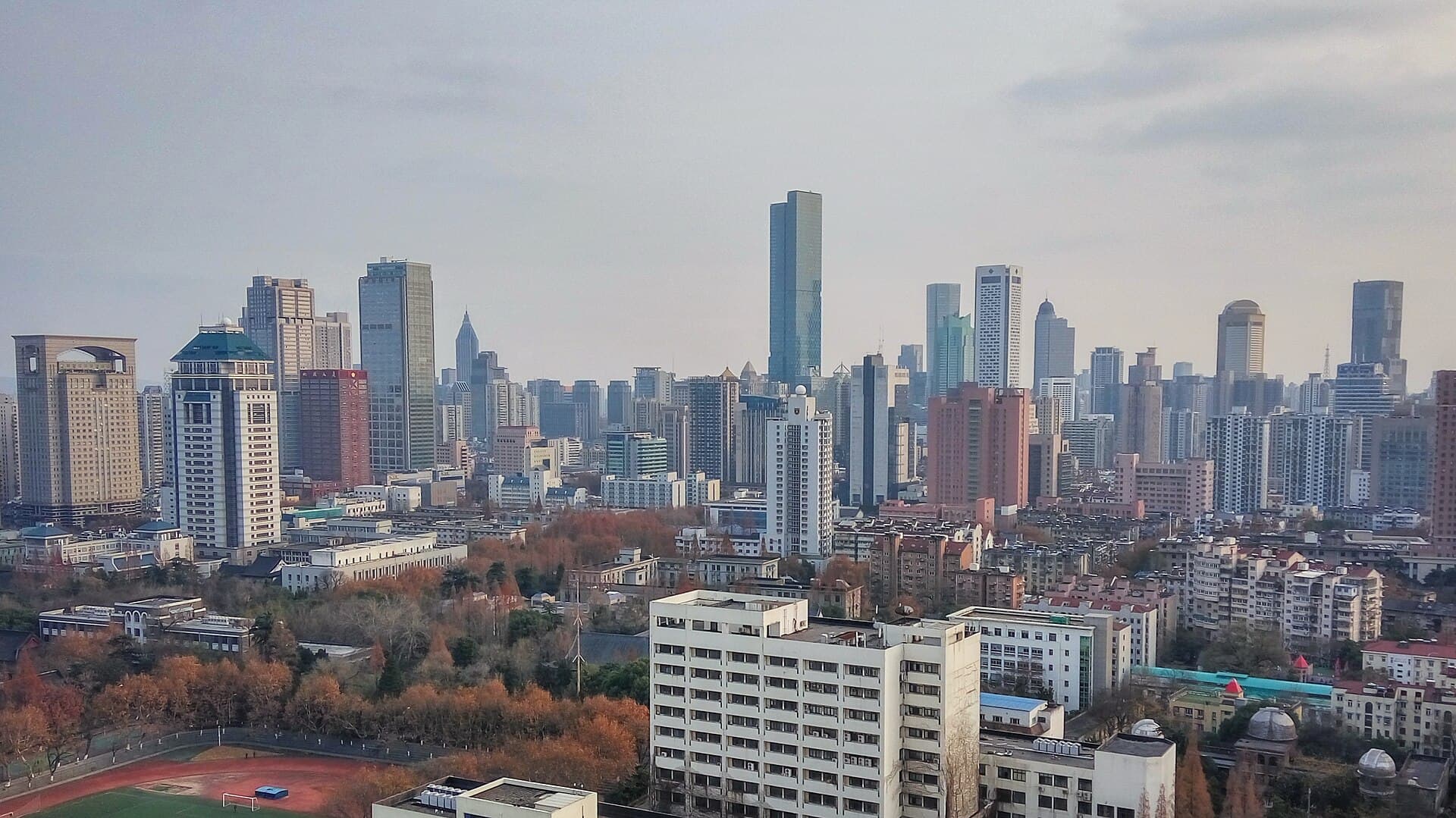
Study city
Nanjing · Jiangsu
Yangtze city · former capital heritage
- Four seasons · humid summers
- History, education, and riverside parks
- Walkable campuses · strong student districts
985 · Double First Class · Soft #15
Photo: Haha169 · CC BY-SA 4.0 · Wikimedia Commons
Southeast University
China, Jiang Su Sheng, Nan Jing Shi, Jiang Ning Qu, 东南大学路2号 邮政编码: 211189
About Southeast University
Southeast University (SEU), founded in 1902, is one of China’s oldest higher education institutions. It is in Nanjing, capital of Jiangsu Province. Jiangsu has ranked first among Chinese provinces in absorbing foreign investment for five continuous years in the period cited; more than one-third of the world’s top 500 multinational corporations have branches in the province. Nanjing is about two hours from Shanghai by train and reachable by air from other major cities. SEU is a key university under the Ministry of Education and a research-oriented comprehensive institution with 3 national key labs, 26 ministerial key labs, 2 national engineering research centers, and 10 ministerial engineering research centers. In MOE discipline assessments cited, biomedical engineering ranked 1st, transportation engineering 2nd, architecture and art 3rd, and civil engineering 5th. SEU awards bachelor’s, master’s, PhD, and honorary degrees and offers over 75 undergraduate programs )
Available Programs
66 programsKey Highlights
China Ranking
#15 in China
Average Tuition
¥35,110/year
Programs Offered
66 programs across various disciplines
University Information
University projects
Ranking
#15 in China
Intl. UG tuition
¥16,000–¥32,000/year
Location
Nanjing, Jiangsu
Degree programmes
75 undergraduate
Programs on this site
66 programs
Related Universities
Explore other universities you might be interested in
Nanjing University of Information Science and Technology
Nanjing University of Information Science and Technology, established in 1960 and renamed in 2004, began as a specialist institute in meteorology and retains strong academic roots in atmospheric and environmental sciences. Located in Nanjing, the university operates under joint oversight by the China Meteorological Administration and Jiangsu Provincial Government. It hosts around 30,000 undergraduate students and more than 1,600 academic staff, over half of whom hold doctoral degrees or have studied abroad. The institution comprises 22 schools and departments, spanning disciplines from atmospheric physics and remote sensing to computer science, economics, and languages. NUIST delivers bachelor’s, master’s, and doctoral programmes across 55 undergraduate specialisations. Its research infrastructure includes over 20 provincial and ministerial-level institutes, with several disciplines designated as key or characteristic at national and provincial levels.

Nanjing Forestry University
Nanjing Forestry University was founded in 1902 and sits on the lower slopes of Zijin Mountain in Nanjing. It is a provincial key university with academic strengths in forestry, engineering, and social sciences. The campus supports interdisciplinary teaching and research, particularly in areas linked to ecological development. Around 25,000 students study across its schools and institutes. NJFU offers undergraduate, master’s, and doctoral programmes, including specialist degrees in fields such as disaster prevention and reduction engineering.
Nanjing University of Aeronautics and Astronautics
Founded in Nanjing in 1952, Nanjing University of Aeronautics and Astronautics has grown into a multidisciplinary university with strong foundations in aeronautics, astronautics, and civil aviation. It hosts fifteen colleges, including Aerospace Engineering, Energy & Power Engineering, and Civil Aviation, alongside nearly one hundred research institutes and over fifty laboratories—among them a National Key Laboratory and several ministerial-level facilities. The university offers undergraduate, master’s, doctoral, and postdoctoral programmes across engineering, management, natural sciences, and the humanities. Its campus community includes more than sixteen thousand undergraduates, nearly eight thousand postgraduates, and over six hundred international students. With over three thousand full-time staff—including hundreds of professors, doctoral supervisors, and nationally recognised scholars—the university supports teaching and research through sustained institutional development. Its academic profile reflects a long-standing focus on aerospace-related disciplines while maintaining breadth across science, technology, and social sciences.
Nanjing Medical University
Nanjing Medical University was founded in 1934. It is a key university sponsored by Jiangsu Province. It has seventeen schools plus one independent school (Kangda School), 23 affiliated hospitals, and more than fifty teaching hospitals in Jiangsu, Shanghai, Zhejiang, and Shandong. Programs include 17 undergraduate majors, 2 six-year dual bachelor’s degree programs, and 5 seven-year programs. Enrollment is more than 13,000 students. Education covers undergraduate, graduate, and post-doctoral training for full-time, adult, and international students. International and Hong Kong/Macao/Taiwan admissions resumed in 2002; more than 500 such students were reported. Faculty: 779 full-time, including 178 professors, 225 associate professors, and 1 academician of the Chinese Academy of Engineering. Research facilities include 1 state-level key laboratory, 4 ministry-level key laboratories, and 13 provincial-level key laboratories (engineering centers). The library holds about 850,000 printed items, 780,000 e-books, and over 6,000 Chinese and foreign journals and newspapers. It is the medical literature center of the Jiangsu Academic Library & Information System. The university has academic exchange and cooperation with medical colleges and universities in the United States, Canada, Australia, Sweden, Japan, Taiwan, and Hong Kong SAR.
Nanjing Agricultural University
Nanjing Agricultural University (NAU) is a Ministry of Education university in Nanjing with agriculture and life sciences at its core. It is a Double First-Class institution offering bachelor’s, master’s, and doctoral programmes across plant, animal, food, engineering, and social-science faculties. International students join degree and exchange pathways in food, environment, and rural development fields.
Nanjing University
The Institute for International Students handles international student enrollment at Nanjing University. It is a national test site for HSK, the Test of Practical Chinese (C.Test), and the Teaching Chinese as a Foreign Language (TCFL) Capability Test. It has hosted more than 10,000 international students from over 70 countries. Graduates have gone into politics, business, and scholarship. The Institute includes the Department of Chinese Language, the Department of TCFL, the Institute of Chinese-Foreign Culture Comparison Studies, the Postgraduates Center, and the Teaching Materials Center for TCFL. It offers Chinese language and culture programs, short-term language training, and degree programs (B.A., M.A., Ph.D.). Faculty: 33 full-time (23 professors or associate professors) plus over 30 adjunct faculty, experienced in teaching Chinese to foreign students. It has served as a training site for organizations including the Chinese Department of the UN, CIEE, the Chinese Teaching Association of the New York Area, and the American National Chinese Flagship Program, and works with foreign governments, companies, diplomatic services, the military, and schools. It offers Chinese language and culture programs and HSK prep courses; HSK candidates from the university have traditionally ranked highly.